What has the war done to the Lebanese? Shifts in Perceptions and Expectations
To better understand what the Lebanese are currently experiencing ,and their expectations regarding the outcome of this war and its impact on both themselves and the country, Ara Lebanon for Research and Consultancy, in collaboration with Raseef22, conducted a national survey of 470 adult citizens between March 24 and 31, 2026.
The sample reflected population distribution by residence, age, gender, and sect. Data was collected through Computer-Assisted Telephone Interviews (CAPI), with contacts randomly selected using arithmetic methods..

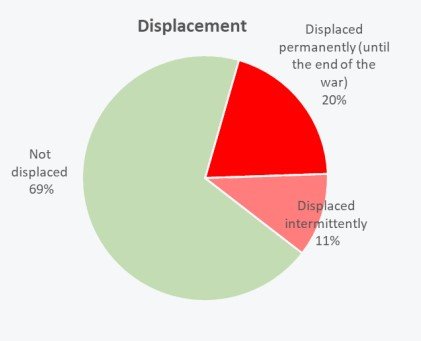
Between forced displacement and temporary relocation, 31% of Lebanese people were compelled to leave their homes. Most displacement were permanent (20%) driven by Israeli strikes and evacuation warnings, while 11% relocated intermittently out of fear. Undoubtably, Shiites were the most affected (73%) followed by Sunnis (21%), Druze (16%), and Christians (7%)
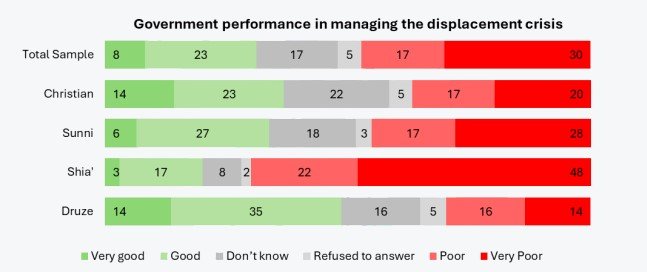
The Lebanese are dissatisfied with the performance of the Lebanese government in
handling the displacement crisis. 47% expressed dissatisfaction with its performance,
describing it as very weak (30%) or weak (17%), compared to 31% who expressed
satisfaction, describing its performance as very good (8%) or somewhat good (23%).
Meanwhile, 17% did not respond due to lack of knowledge, and 5% refused to answer.
Dissatisfaction was higher among women (53% rated it weak/very weak) then men (43%
rated it weak/very weak), as well as among those displaced (62% rated it weak/very
weak) compared to those who remained (40% rated it weak/very weak).
Compared to the performance of the previous government during the 2024 war, 51% of
Lebanese people considered the current government’s performance to be worse than
that of its predecessor, while 19% considered it better, and 10% saw no difference
between the two. On the other hand, 18% did not respond due to lack of knowledge, and
3% refused to answer.
38% of Lebanese people, from all sects and religious groups and at relatively similar rates
(62% Druze, 39% Christians, 37% Shiites, 35% Sunnis, and 39% of those who did not
disclose their religion), stepped in to help displaced persons through volunteer work,
financial donations, or in-kind assistance, despite the fact that people’s economic
conditions have become worse than they were during the 2024 war.

For 24%, their work has stopped completely; for 13%, it has stopped temporarily; while 16% continue to work partially. Those who reported that their work has not been affected and continues as usual did not exceed 18%.
Work stoppages, whether complete or temporary, have affected Lebanese across all sects. However, the highest rate was among Shiite Lebanese (48%), followed by Sunnis (37%), Christians (30%), Druze (24%), and those who did not disclose their sect (26%).
Additionally, working hours have been affected for half of those who are still working either regularly or partially. While 52% reported no change and maintained their usual working hours, 37% said their working hours had decreased, significantly for some (18%) and slightly for others (19%). In contrast, a small group (10%) reported that the war led them to increase their working hours, significantly for some (3%) and slightly for others (7%).
“Remote work” has returned during the war, reminiscent of the pandemic period. Among those still working, 5% have shifted to fully remote work, 7% are working remotely more than before, and 5% were already working remotely and continue to do so. The majority (82%), however, still go to their workplaces.
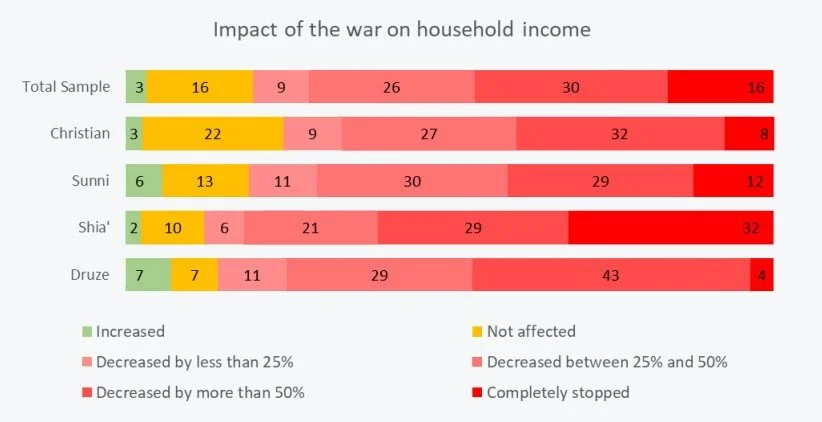
The decline in work has inevitably worsened people’s living conditions. 16% reported that their household income was completely cut off, 30% said it decreased by more than 50%, 26% reported a decrease between 25% and 50%, and 9% reported a decrease of less than 25%. This means that, overall, 80% of Lebanese households experienced a decline in income, albeit to varying degrees.
On the other hand, 3% reported that their household income increased due to the war, while those whose income remained unaffected did not exceed 16%.
With the general decline in work, the poorest group (those with a household income of less than $400 per month) appears to be the most affected and most vulnerable to hardship, as 65% of them reported that their household income was either completely cut off or decreased by more than half

No doubt, media outlets and influencers fueled polarization.
Accordingly, 42% reported that their social relationships have been affected by this war: tension now dominates some relationships (20%), communication with certain family members and friends has decreased (20%), some relationships were lost due to differences in opinions and political positions (1%), or people avoided discussing politics and the war to preserve their relationships (1%).
On the other hand, 58% said their social relationships were not affected. Notably, most of them did not vote in the 2022 parliamentary elections, which clearly highlights the impact of Lebanese politics on people’s social lives.
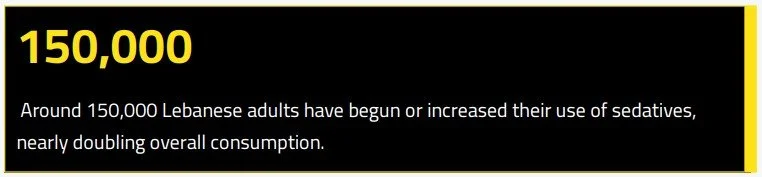
To put these figures into perspective, nearly 150,000 Lebanese adults have begun or increased sedative use, causing overall consumption to almost double.

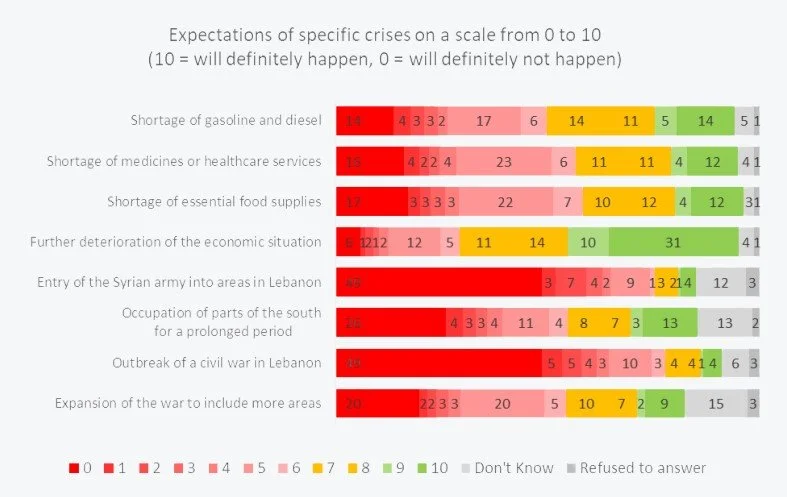
First, expectations for the coming period point to “further economic decline”: 31% of Lebanese believe it will certainly occur, with similar proportions across all sects. In contrast, 6% completely rule it out, the highest share among Shiite respondents.
Second, most Lebanese dismiss the possibility of disruptions to basic resources such as fuel, food, and medicine. Despite the gasoline and diesel shortages following the 2019 financial crisis, equal proportions (14%) believe such a crisis will certainly happen or completely rule it out, while the majority lean toward it not occurring.
Third, 12% expect “a shortage of basic food supplies” to certainly occur, compared to 17% who completely rule it out.
Fourth, 12% foresee “a shortage of medicines and healthcare services”, while 16% do not expect it at all.

The largest share of respondents (37%) said they were unable to predict when the war might end, while 2% refused to answer. For the rest, 16% expected it to end within weeks, 25% anticipated it lasting one to three months, 11% three to six months, 6% six months to a year, and 3% believed its would continue for more than a year. These responses were collected the last week of March.
Shiite Lebanese were the most optimistic about the war ending within weeks (29%), compared to 11% of Sunnis and Druze, 9% of Christians, and 20% of those who did not disclose their sect.

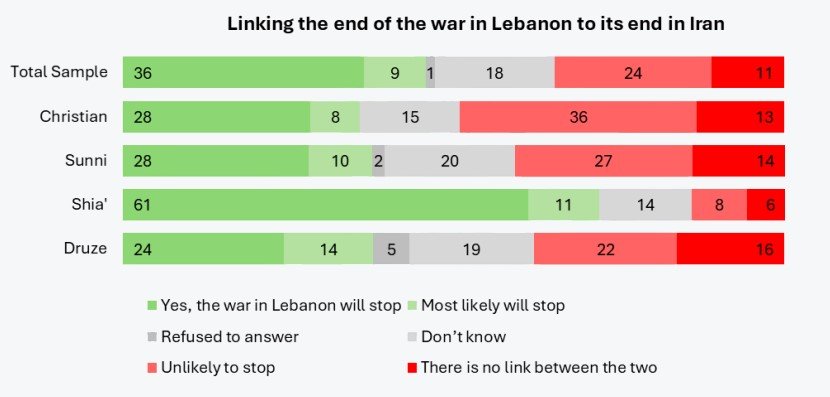
This division is slightly leaning toward the view that the end of the two wars are not connected, a pattern evident across most sects except among Shiites. The latter are certain that the war in Lebanon will end if it ends in Iran (61%), with an additional 11% considering this outcome likely.
In contrast, the majority of Christians (49%) believe the war in Lebanon will not end if it does in Iran, compared to 36% who see a connection. Similarly, among Sunni respondents, 41% reject a link between the two conflicts, while 38% believe they are connected.

A clear majority of Lebanese dismiss the “possibility of a civil war”: 49% completely rule it out, compared to only 4% who believe it will certainly occur. A similar pattern emerged regarding the “potential entry of the Syrian army into Lebanon”, with 49% rejecting the scenario outright and just 4% expecting it to definitely happen.
When asked about possible “expansion of the war to include more areas,” 20% of respondents completely ruled it out, compared to 9% who believed it would certainly happen. Similarly, regarding the prospect of an “Israeli occupation of parts of Lebanese territory for a prolonged period,” 26% dismissed this scenario outright, while 13% expected it to definitely happen. Both scenarios were more strongly rejected by Shiite respondents.

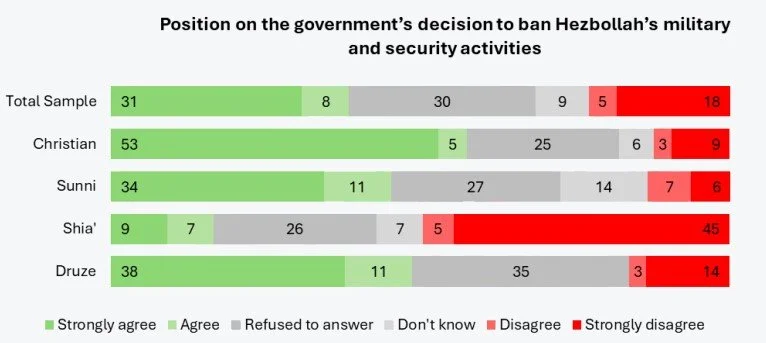
The strongest support for this decision came from Christians (53% strongly support and 5% somewhat support), followed by Druze (38% strongly support and 11% somewhat support), and then Sunnis (34% strongly support and 11% somewhat support).
In contrast, the Shiites respondents expressed the opposite view, with 45% strongly opposing and 5% somewhat opposing the government’s decision.
Among the different sects, only Christians expressed overall support for the initiative, with 37% strongly in favor and 23% somewhat supportive. By contrast, Sunnis tended to reject it, with 34% strongly opposing and 10% somewhat opposing. Unsurprisingly, Shiite respondents showed the highest level of rejection, with 60% strongly opposed and 7% somewhat opposed.
It is worth noting that 5% of Shiites supported it strongly and 8% somewhat. Among Sunnis, 15% supported it strongly and 10% somewhat. Among Christians, a non-negligible share opposed the initiative: 15% strongly and 6% somewhat.
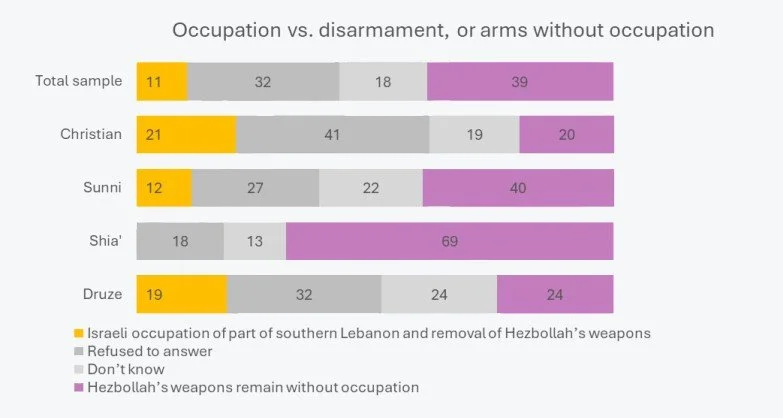
Finally, when Lebanese respondents were given a choice between two exclusive scenarios: Either Israel occupying part of the south with Hezbollah disarmed, or Hezbollah retaining its weapons without any occupation. A remarkable, 39% chose to keep Hezbollah’s weapons, compared to 11% who preferred disarmament even if it meant the partial occupation of the south.
Notably, a very high percentage refused to answer this question (32%), while 18% said they did not know how to respond, thus half of the sample did not provide a definitive answer.